Accessory Dwelling Units (ADUs)
Add living space and long-term value.
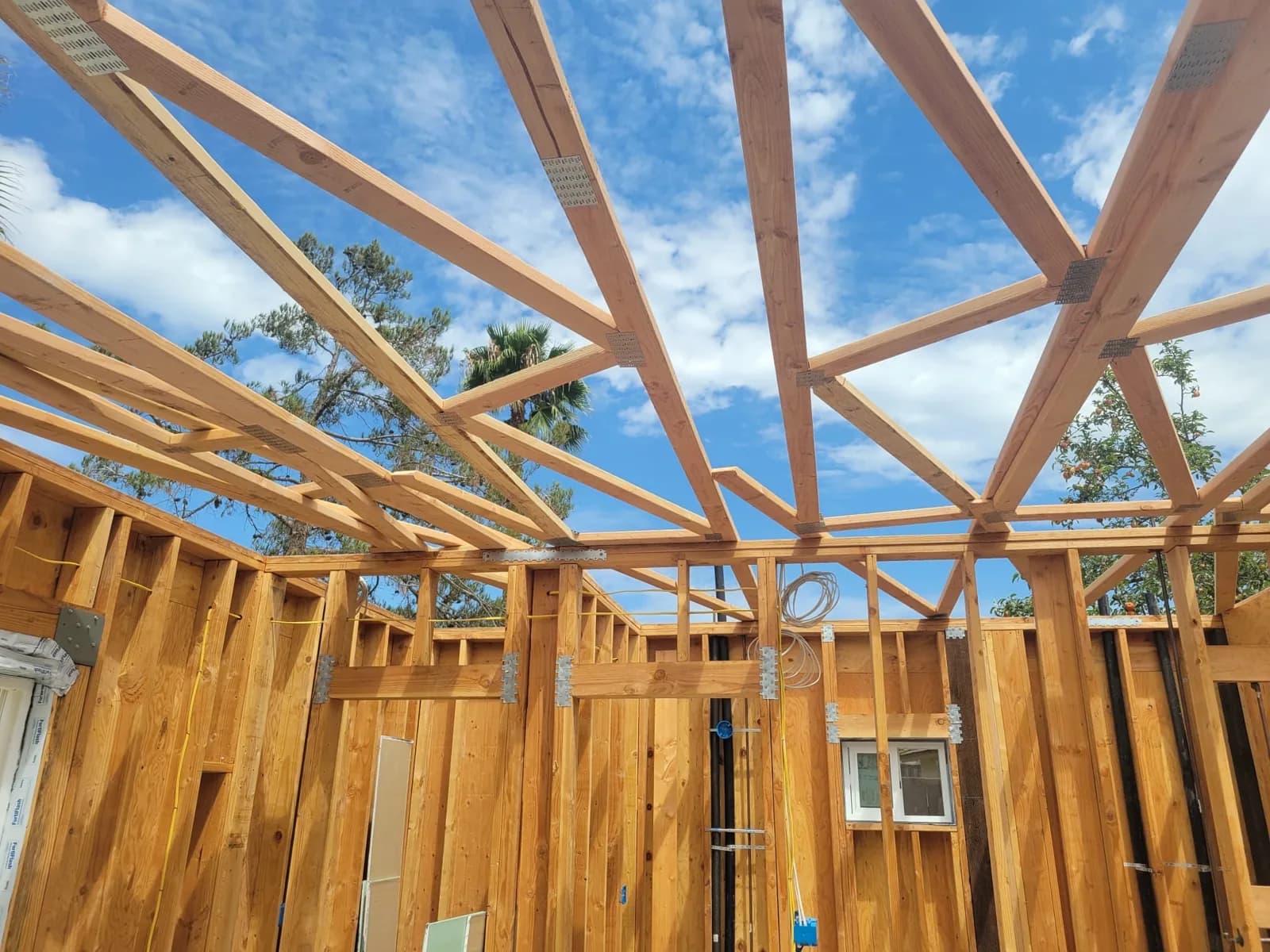
An ADU adds rentable space and real property value. We take you from feasibility and plans through permitting and construction — civil, structural, and architectural all handled in-house, which is exactly where most ADU projects get stuck.
What's included
- —Detached, attached & garage conversions
- —Feasibility & site planning
- —Architectural, structural & civil plans in-house
- —Full permitting coordination
- —Utility connections & Title 24
The details
What to expect, what it costs, and how the permits and structure get handled.
Where ADU projects actually get stuck
On paper, an ADU is simple: California now approves them ministerially, and the city or county is generally required to approve or deny a complete application within 60 days. In practice, projects stall in the details — incomplete site plans, setback errors, soils questions on a sloped lot, and utility connections. That's where having engineering in-house changes the outcome.
We take an ADU from feasibility and plans through permitting and construction, with the civil, structural, and architectural work all produced by the same team that builds it. When the city sends back a correction, we turn it around — we're not waiting on an outside drafter to fit you into their queue.
What it costs and how long it takes in San Diego
A garage conversion is usually the most affordable path, often landing around $80,000–$200,000. A detached, new-build ADU more commonly runs $300,000 and up — roughly $350–$600 per square foot in today's San Diego market — with the first few hundred square feet costing the most per foot. Sloped lots, long utility runs, and panel upgrades are the biggest swing factors, so we price those honestly up front.
Realistically, a detached ADU runs about 10–16 months from first drawing to final inspection. Design takes a month or two, permitting commonly runs a few months as correction cycles get resolved, and construction is usually five to seven. Conversions and junior ADUs move faster.
Rules worth knowing before you start
As of 2026, a standard ADU in California carries no owner-occupancy requirement — you can rent both the main house and the ADU — and detached units are generally allowed up to 1,200 square feet with four-foot side and rear setbacks. Units under 750 square feet are typically exempt from development impact fees, which meaningfully lowers the cost on smaller builds.
A few things trip people up: ADUs can't be rented for stays under 30 days, so they're long-term rentals, not short-term ones. Only the ADU's added value is reassessed for property tax, so your existing Prop 13 basis stays intact. And rules differ between the City of San Diego, the unincorporated County, and the Coastal Zone — we confirm exactly what applies to your parcel before we draw anything.
Goes hand-in-hand with
Projects our clients usually pair with this one.
You'll also need
The plans and permits this work typically requires — handled in-house, so nothing stalls.
Common questions
- How much does it cost to build an ADU in San Diego?
- A garage conversion often runs $80,000–$200,000, while a detached new-build ADU more commonly starts around $300,000 — roughly $350–$600 per square foot. Sloped lots, long utility runs, and electrical panel upgrades are the biggest cost drivers, so we estimate those honestly before you commit.
- How long does it take to build an ADU?
- A detached ADU typically takes about 10–16 months from first drawing to final inspection — a month or two of design, a few months of permitting as corrections get resolved, and roughly five to seven months of construction. Garage conversions and junior ADUs move faster.
- Do I have to live on the property to build an ADU?
- No. As of 2026, a standard ADU in California carries no owner-occupancy requirement, so you can rent out both the ADU and the main home. Junior ADUs can be different, so we confirm the rules for your specific parcel and jurisdiction first.
- Can I rent my ADU on Airbnb?
- Not for short stays. ADUs generally can't be rented for periods under 30 days, so they work as long-term rentals rather than vacation rentals. The upside is steady rental income and added property value without the short-term-rental restrictions.
- Will building an ADU raise my property taxes a lot?
- Only the ADU's added value is assessed and added to your bill — your existing home keeps its Prop 13 base, so there's no full reassessment. In practice that's roughly 1–1.25% of the ADU's value per year, not a reset of your whole property.
- Why do ADU projects get delayed?
- Usually utilities and site conditions, not the build. Electrical panel upgrades can carry long SDG&E lead times, sloped lots may need soils reports and grading, and water or sewer connections add cost and time. We flag these early and file utility applications in parallel with permitting.
Get your adus estimate
Real numbers from the team that does the work — permits and engineering handled in-house. No obligation.
ADUsNo obligation. We'll never share your details.